
A chemistry test that goes beyond memorising definitions
Plan a chemistry test with clear questions, careful notation and a useful mix of recall and explanation. Check MCQs, diagrams and working before printing it.
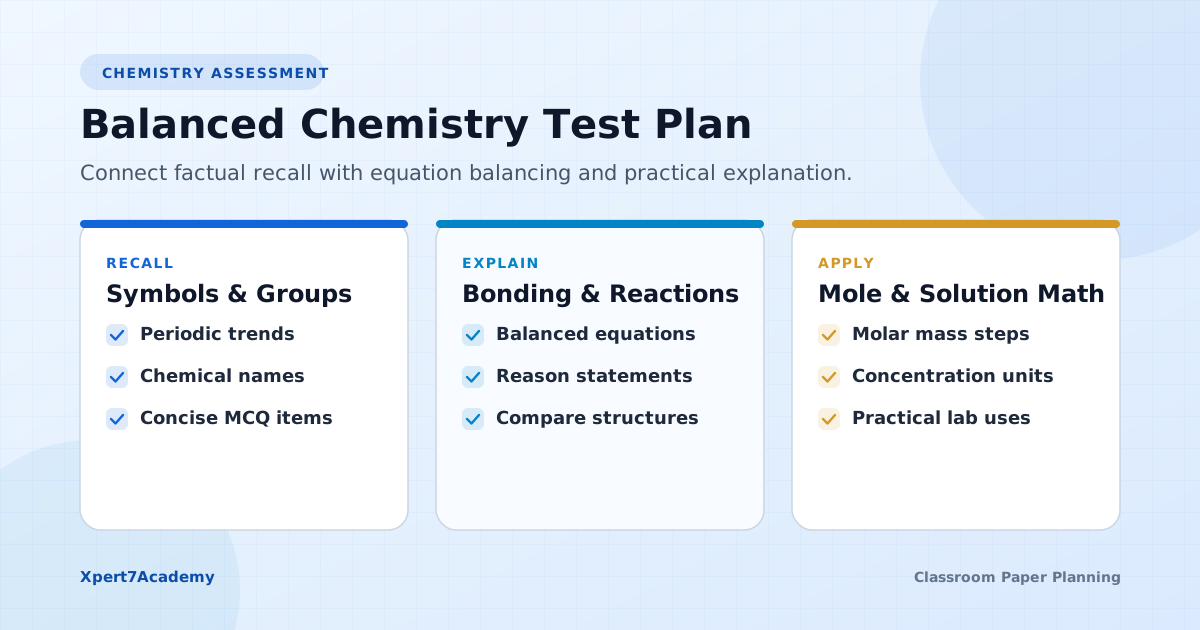
Definitions are straightforward to put in a chemistry test. Finding out whether students can use those ideas takes a little more care. A useful paper can make room for both: the vocabulary students need and the explanations, equations or calculations that show what they understand.
Choose the lesson goals first
Start with the material your class has covered and the requirements you are working towards. Decide whether the test is a quick chapter check, a revision exercise or practice for a particular exam format. Those are different jobs. A short classroom test does not need to imitate a full board paper.
- Identify the concepts that matter most in the selected chapters.
- Include equations or calculations only where they belong in the taught material.
- Check the relevant official guidance separately if you need to follow an examination pattern.
Make the MCQs worth answering
Read the question without its options. Is the task clear? Then read every option and check that there is one defensible answer. Distractors should relate to the concept being tested. A joke answer or a noticeably longer correct option may make the question easier for the wrong reason.
When assembling the draft, compare manual and balanced random question selection and choose the route that gives you time to inspect each option and formula.
- Write a clear question with enough information to answer it.
- Check each option for accuracy and ambiguity.
- Review the answer key against the final wording, not an earlier draft.
Ask for an explanation, not just a label
Where it fits the lesson, follow a familiar idea with a focused why or how question. Tell students what kind of response you expect. “Explain your choice in two sentences” is easier to act on than an open-ended instruction with no clue about the depth required. Avoid demanding an explanation the class has not had a chance to practise.
Treat notation as part of the question
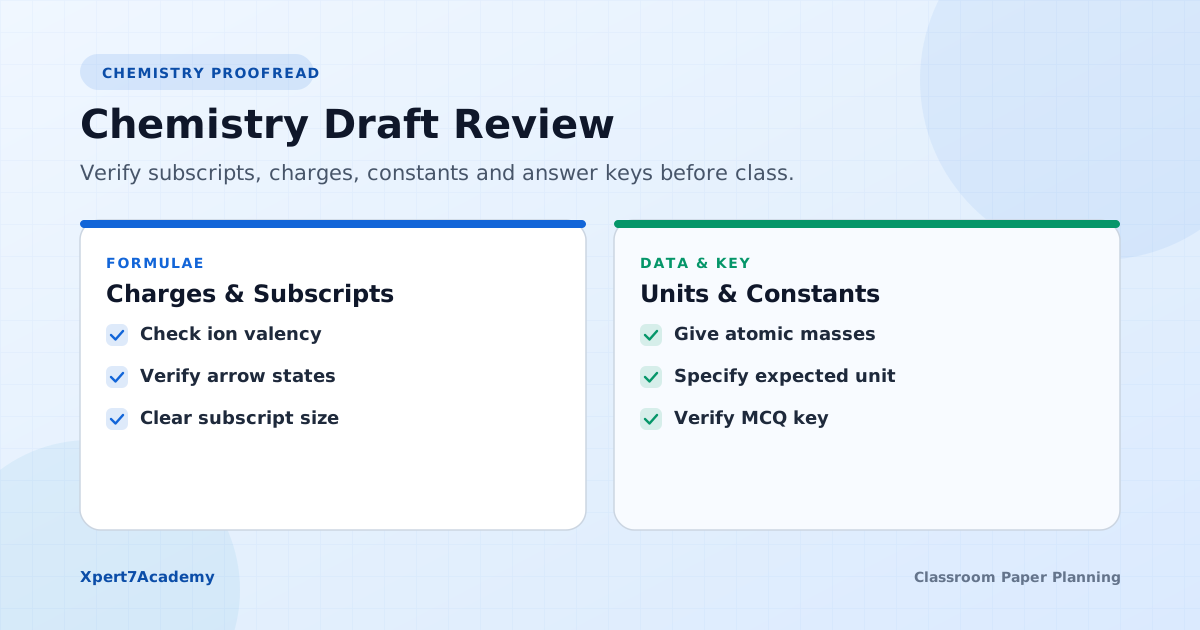
A missing charge, faint subscript or unclear arrow can change the meaning of a chemistry question. Check formulas, units and any diagrams in print preview. When a question contains an image, zoom in to make sure the labels remain readable. Do not assume the original formatting survived copying or editing.
Use past papers with a clear purpose
A past paper can help you discuss how a question is worded or how much detail an answer needs. Match it to the syllabus your students are studying, and check its source and exam details. Xpert7Academy’s past-paper archive is public, so students and teachers can browse and download the available files without a subscription. An older paper is practice material, not a promise about the next exam.
Finish with a paper you would want to mark
Build your sections from the available chemistry questions in Xpert7Academy, then review them together. Check the total marks, remove accidental repeats and prepare your marking notes. If a question could reasonably be interpreted in two ways, fix it before printing. A few minutes spent here can save a much longer discussion when the papers come back.
Find your next practice paper.
Browse and download without an account or subscription.
Before choosing questions, check your section marks with the free planner. It accounts for optional questions as well as compulsory ones.